
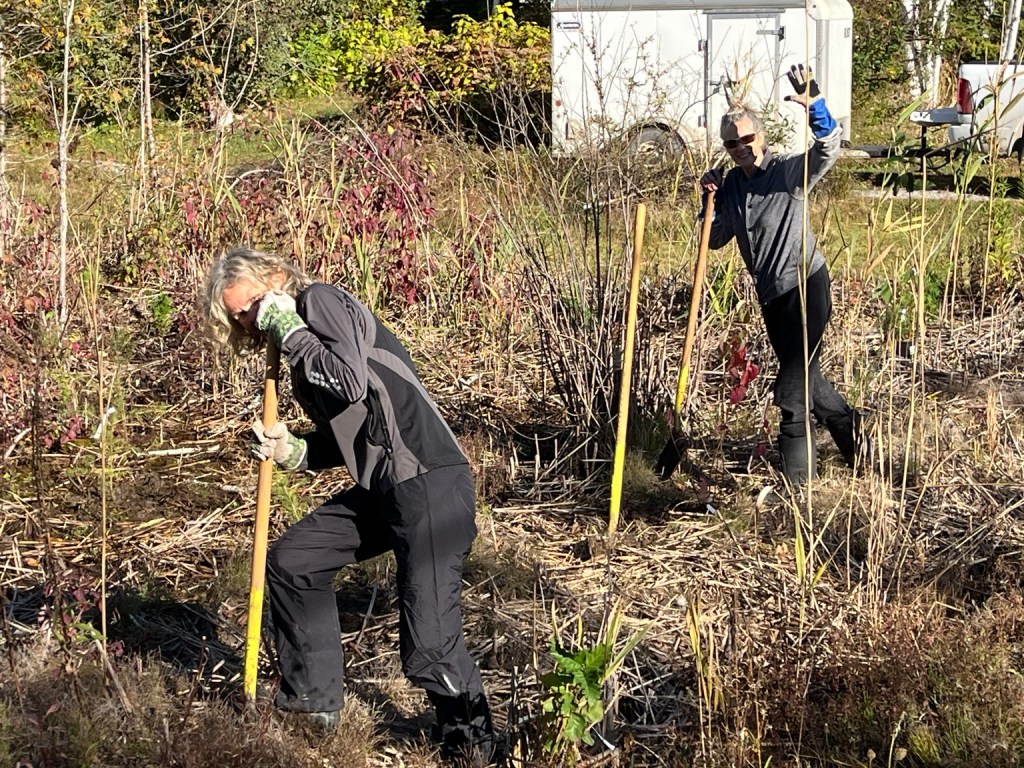
On Sunday, 18 October 2026, neighbours gathered in the sunshine to plant 100 native trees and shrubs on our community-owned property. There were shovels, plenty of helping hands and a shared sense that it felt good to be caring for this land together.
The planting marks another step in the Community Land Restoration Project, building on two years of work to control invasive Phragmites and restore native habitat.
A warm thank you to Briar and Jane Boake, Kevin Rost, Karen Collacutt, Karen’s sister Laura Zeidler and niece Julia Zeidler, Jerry Dewhirst, and Kris Farhood for pitching in and making it such an enjoyable morning.
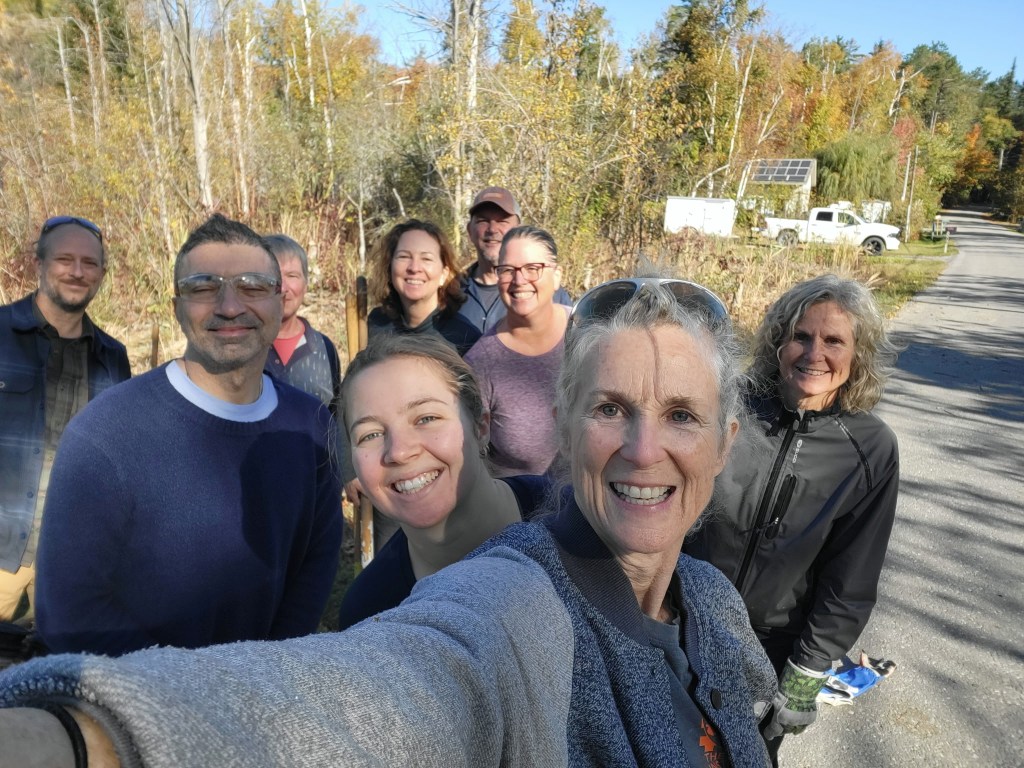
Plants, shovels and enthusiasm
Peter from the Lake Simcoe Region Conservation Authority brought the plants and shovels, along with his knowledge and enthusiasm. We’re grateful to LSRCA for providing the plants at no cost to CHA and supporting us throughout the morning.
What we planted
Our 100 plants included the following native trees and shrubs:
- 10 Tamarack
- 5 Swamp White Oak
- 5 Sycamore
- 10 Eastern White Cedar
- 10 Highbush Cranberry
- 10 Speckled Alder
- 10 Red Osier Dogwood
- 10 Pussy Willow
- 10 Arrowwood
- 10 Nannyberry
As these plants become established, our aim is to encourage healthy native growth and leave fewer opportunities for Phragmites to regain a foothold. We’ll continue monitoring and follow-up control as needed.
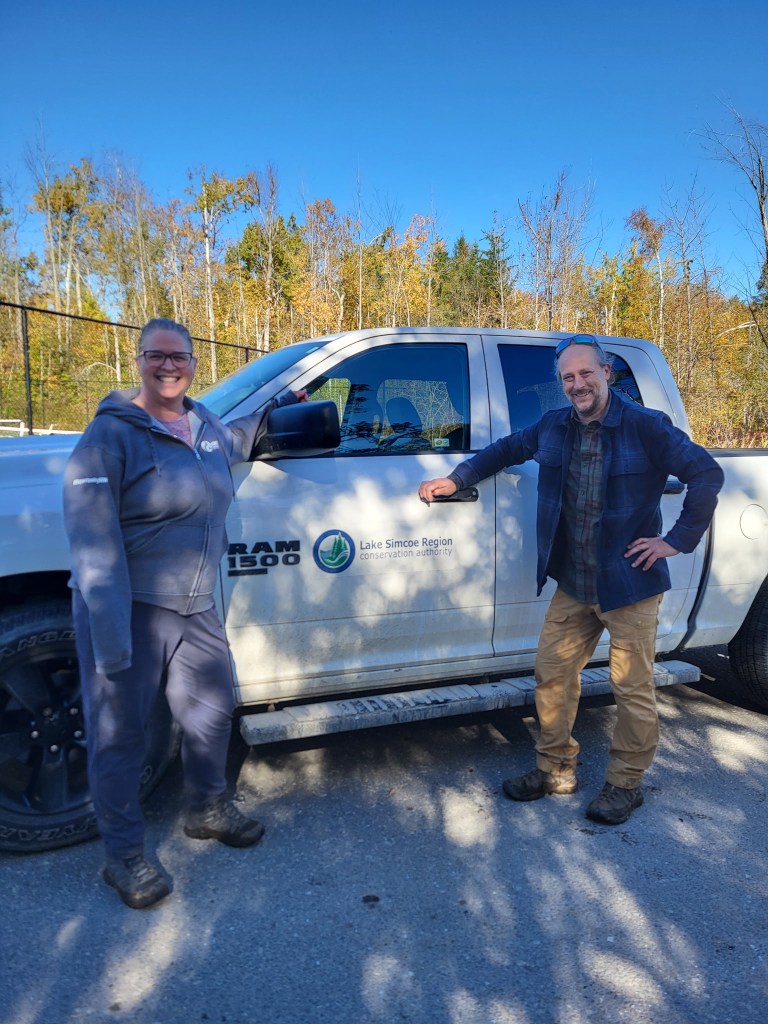
Thank you to LSRCA for the plants, equipment and support.
Getting the new native trees and shrubs into the ground.
Cleanup around the tennis courts
Alongside the planting, significant cleanup has taken place between the tennis courts and the wetland. A strip approximately 6–8 feet wide has been cleared along the side and back of the courts to help protect the court edges and asphalt.
The work has opened up the edges of the courts and made a noticeable difference to the appearance of the property.
Making room for wildlife
About eight dead trees have also been taken down. Some standing dead trees are being retained to provide bird perches and wildlife habitat, with suitable trunks potentially serving as supports for future bird and bat boxes.
Caring for our jointly owned community land means thinking about the whole space. Through this work, we’re helping create habitat for birds, bats, small mammals and amphibians, supporting the health of the watershed and making the entrance to our community more welcoming.
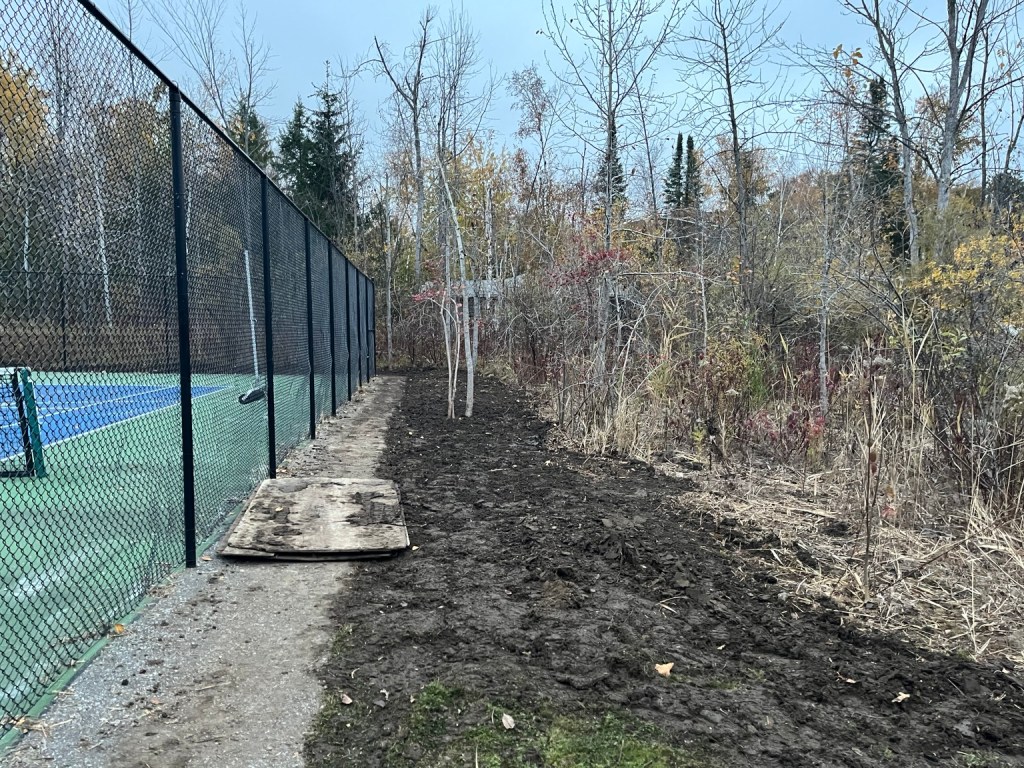
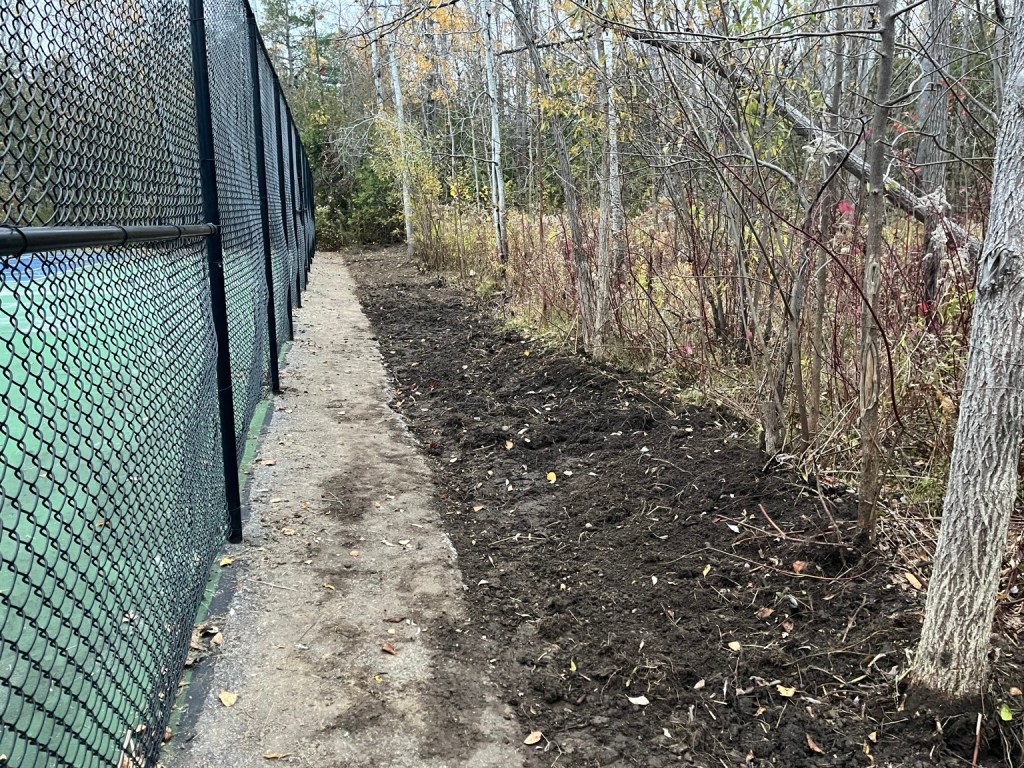
The cleared strip along the side and back of the tennis courts.
What’s next
We’re planning to install bird boxes and bat boxes and submit a new funding proposal early in the new year to support another planting in spring 2027.
With support secured and enough volunteers, we could plant up to 200 additional native trees and shrubs. If you’d like to join us, please email crescentharbourra@gmail.com. We’ll share the date and registration details once plans are confirmed.
Thank you to everyone who has contributed time, knowledge and effort to caring for this property.
Frequently asked questions
Will the planting stop Phragmites from returning?
The aim is to establish native vegetation that leaves less room for Phragmites to spread. Planting will work alongside continued monitoring and follow-up control.
Why are some dead trees being left standing?
We’re retaining some standing dead trees for their habitat value, including bird perches and shelter for wildlife. Suitable trunks may also support future bird and bat boxes.
Can I help with the spring planting?
Yes! Please email CHA to express your interest. More volunteers would help us take on a larger planting, subject to funding and plant availability.
For the project history, comparison photos and community Q&A recording, visit our Community Land Restoration Project page.


Leave a Reply